
MENDING DIVISIONS
the attack on Tucker Carlson (and others) . . . and a way out of the right-wing morass


The division is palpable. On the one side are the self-proclaimed (ultra!) pro-Israel crowd, operating as gatekeepers of sorts for the political Right generally and, according to certain pundets, Christianity specifically. Many of these seem sincere and desirous of maintaining fidelity to longheld values. Others, turning it up a few notches, are not-a-little extreme in their assessment of anyone who dares question the influence and activities of modern Israel. On the other side, there is a panoply of views that broadly agree that true loyalty to America, the political Right, and a biblical worldview, requires seeing that Israel has far too often abused its favored status, taken advantage of America, and engaged in questionable, if not outright despicable, behavior. Some of these Israel-questioners have no apparent commitment to the Right or to the values that define conservative thought; indeed, a number of commentators take extreme positions on certain issues. Others, however, maintain a more nuanced and, in the better cases, biblically-driven perspective, evaluating the Israel question from the perspective of Christian truth claims.
At the center of this recent controversy have been people like Tucker Carlson, Thomas Massie, Marjory Taylor Green, and a myriad of others who span the political spectrum. Most recently, Carlson interviewed a rather bombastic and popular Israeli critic, Nick Fuentes, a man who has made certain radical claims and has even attacked Tucker. In response to the interview, the knives quickly came out against Carlson, accusing him of “platforming” an anti-semite. Among those who directly attacked Tucker are Ted Cruz, Mark Levin, Ben Shapiro, and others. Newsmax, the conservative media outlet, has also subtly joined in the effort to paint Tucker as antisemitic and “the most dangerous man in America.” This has certainly created a divide on the Right, one that may lead to political fallout that ultimately harms our country.
If there is a division that threatens the wellbeing of our country, is there a way for those who agree on many issues to somehow come together to form a truly America First platform? Even more relevant, what ought our policy and viewpoint be as we move forward as a country? Do we completely embrace everything emanating from Israel, no (or few) questions asked, treating the very subject as politically, socially, and theologically taboo? Or, can we forge a way ahead that is sensitive to our history and previous commitments, yet brutally honest when it comes to our connections to foreign entities that sometimes benefit us and other times threaten us? Above all, is it feasible to approach the subject of Israel in a manner that seeks faithfulness to God’s revealed will in Scripture?
Certainly, there are opinion-makers who do not operate in our best interests. Fuentes, mentioned above, has said some terrible things, claiming, for instance, to admire Stalin, and sometimes going on tirades against people-groups, including Jews, that run contrary to our nation’s values and to divine revelation. The tension, of course, is that it can be tricky trying to decipher truth from error, for not everything Fuentes says is wrong and at least a good portion of his diatribes is worth hearing. This effort to condemn such individuals is further complicated by the fact that we live in a country that values liberty and the ability to speak your mind. Indeed, one of the more brilliant moves of the founders was allowing the freedom of multiple perspectives, trusting that over time the people (at least when governed by biblical values and the image of the divine) will be able to make the case for what is right. There is always a battle between good and evil, of course, and so the hope of Christians and conservatives is that truth, under the hand of a sovereign God, wins the hearts and minds of many. Along the way, however, there will always remain voices that are confused, wrong, or a blend of truth and error. Gatekeeping is at best a delicate practice within any social or political group—what do we allow or disallow? Within the church, however, there is more of what might be considered a gatekeeping mentality in that believers are commanded to adhere to sound doctrine. Thus, some things are consistent with “the faith once delivered to the saints” (Jude 1:30, while others are heretical. Even here, though, the church must be careful not to overstep its bounds, creating division over matters that are less than essential. Within a political and a theological framework, there are parameters that must be maintained, in other words, and making a distinction between “the doctrine according to godliness” (1 Timothy 6:3) and genuine freedom (“each person must be fully convinced in his own mind” — Romans 14:5ff).
Within the political Right, the same challenge exists—seeking to determine what we as a party, a political camp, an America First movement, accept and reject. If there is any gatekeeping it must be about vital matters, not differences of opinion on non-essentials. Indeed, in my view at least, the best way to create a useful and God-honoring trajectory is by delineating between what is actually based and neccesary and what is less than crucial.
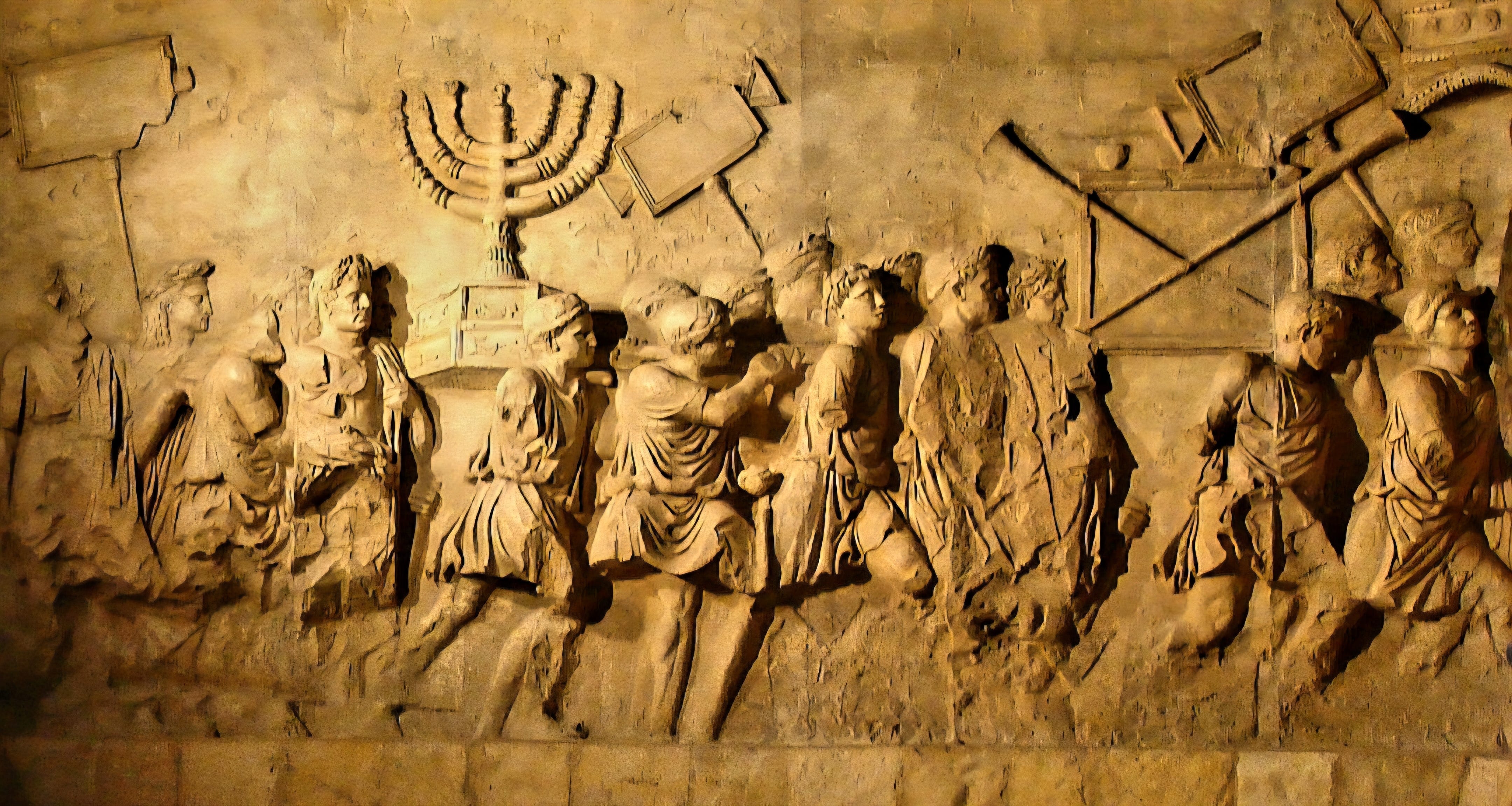
THE JEWISH QUESTION
Israel was and, in some sense, is special.
This does not mean that Jews are superior, though some have advocated for such a position. God did indeed choose and bless the Jews, but their special status was not due to genetic or cultural superiority but because God wanted to demonstrate his glory and grace.
When God declares his will for Israel (Deuteronomy 7:1-6), he describes his ultimate reason for their blessedness as follows:
“The Lord did not set His love on you nor choose you because you were more in number than any of the peoples, for you were the fewest of all people, but because the Lord loved you and kept the oath He swore to your forefathers . . .” (7:7-8).
God did not choose Israel because of anything within them that they might take credit for. Rather, he rescued them and blessed them because they were not significant. If any benefits came to the Jews, in other words, these were due to the greatness of a gracious God. To be chosen, therefore, is not to be braggadocious but humble. “I loved you not because of anything within you but because I decided, in the mystery of my plan, to love you.” This was true of ancient Israel, and it is also true of today’s believers who, we are told, were “chosen in him before the foundation of the world” (Ephesians 1:4ff).
All of this stated, there was and always will be something special about Israel. God did indeed set his favor upon that nation. God blessed Israel. The Messiah was indeed a Jew. The first followers of Jesus were largely Jewish. The New Testament was not only written primarily by Jews but has a jewish orientation to it. Furthermore, there are many who believe that there is a still yet-to-be-fulfilled promise to the descendants of Abraham. This might entail a revival of Jews in large numbers who come to realize that the once reviled Jesus is actually the Messiah. And, according to some, this mass conversion might also include a fulfillment of certain geographical promises. Whatever the particulars—and you’ll find good people on both sides of this issue—there ought to be a recognition that, historically and in the economy of grace, “salvation is from the Jews” (John 4:21). This merits a type of respect for God’s long-term scheme and what may still await the Jewish people. At the very least, we can and should hope for an increase in the number of those Jews who, though once rejecting Jesus, come to faith in him. Whatever the current views and activity of contemporary Jews and the nation of Israel—and this involves a mix of both positive and negative—there is a hopeful mindset that unites Jews and Gentiles in the only Savior.
There was a time when all fell under judgment because of human sin. But God was merciful in rescuing his people, which to a large degree included the Jewish nation. To be one of God’s people involved a faithful connection to the God who revealed himself to Israel, and it extended to proselytes who recognized that the Jewish God was the true God and also possibly to a group of Gentiles who embraced the true God from a distance (“God fearers” — see Ruth 1:16; Acts 10:2). But Salvation comes from the true God via the Jews.
In God’s providence, the Messiah came to the Jews, and many did believe. Most, however, rejected him, which is why Jesus, while weeping, declared “Jerusalem, Jerusalem, who kills the prophets and stones those sent to her, how often I have longed to gather your children together as a hen gathers her chicks, but you were unwilling!” (Luke 13:34). Therefore, in the mysterious plan of God, the overall (though not exhaustive) apostasy of the Jews opened up a way for the Gentiles to experience salvation. The result? “There is neither Jew nor Gentile . . . for you are all one in Christ Jesus” (Galatians 3:28).
The plan of God has numerous strands, but the basic idea is that God blessed Israel and then, mostly through its blindness and rebellion, blessed the world. Depending on your eschatology (i.e., view of the end times), there are many who believe the once beneficiaries of heavenly mercy and grace, the Jews, who by and large fell away from God, failing to embrace the Savior, will return once again to God. Thus, God’s promises will be fulfilled not only through but in the lives of the Jews who “will look on him whom they have pierced, and they shall mourn for him” (Zechariah 12:10) and be restored once more by embracing Jesus.
The nation of Israel is not immune to criticism.
There is an almost superstitious impulse among many evangelicals, a fear that if we say the wrong thing about Israel we will be cursed. This is, of course, a misinterpretation of a passage that described the blessed state of Israel. It is not, however, a free pass for Israel to say and do whatever it might and to hide behind a usually self-serving status as “the chosen.” As stated earlier, being chosen in biblical parameters leads to humility, not self-indulgence or an exaggerated view of one’s importance, much less hubris.
It is indeed an historical reality that Israel has done certain things that are less than honorable. Netanhayu, for instance, made grave miscalculations (or perhaps deceptions) in advocating for conflict that put American citizens in harm’s way in Iraq. Many commentators, and this includes those on both sides of the isle, recognize that certain activities within Gaza have been terrible, and there are more than a few who believe that a genocide of sorts has occurred in that region of the Middle East. Whatever the accuracy of such reports, there is little doubt that Israel has had a massive influence on America’s foreign policy, and some on the Right have grown skeptical and critical of this rather massive control. When our financial wellbeing and our children are at stake, we simply cannot afford to ignore any authority that places America in an unnecessary state of weakness and possible danger. If Israel interferes with an America First agenda, it must be identified and called out. At the very least, this must be debated, and any connection to a foreign country that does not support America must be rejected. This is not hateful, anti-semetic, or in any way prejudicial toward actual Jewish people. Indeed, to classify disagreements about Israeli influence as inherently dangerous, Nazi-like, or anti-semetic is itself a shallow and disingenuous strategy that raises suspicion as to what the extreme “pro-Israel” advocates are hiding. Why can we condemn our American leaders, even disavowing them when we disagree with their policies, but not criticize a foreign country?
ASIDE: Some of the rhetoric coming from those who defend Israel at all cost and wish to condemn the Tuckers and Marjorie Taylor Greens of the world is quite vague. You read things like: “This is what happened in Nazi Germany.” “The way the Tucker crowd speaks is always the language of Jew-haters.” “We cannot afford this kind of anti-Israel talk lest we find ourselves in another holocaust.” This language is arbitrary and lacking substance. We can and should agree that it is wrong to hate any group of people, and we must avoid being so focused on one topic that we ignore others. Hate and violence are out of the question. But why do we avoid speech, discussion, and honest debate? The stifling of free speech is actually what leads to bad decision making and hate. Instead of openly disputing various subjects, we label our opponents as anti-semetic, and it is this censorship that fans the flames of actual anti-semitism. At this point, many of the leaders within the Ultra pro-Isreal crowd simply do not allow meaningful debate about Israel. Amazingly, this ends of making things worse and leads many to wonder what the Ultra-pro-Israel crowd is hiding when it (at times, frantically, excessively, and self-righteously) favors ridicule over free discussion.

QUESTIONS AND ANSWERS
Is Tucker anti-semitic?
It is important to remember that most of us don’t really know Tucker in a personal way. Having listened to him for probably hundreds of hours, however, it seems very likely that Tucker is not at all anti-semitic. Unless you redefine anti-semitism (and some probably have in a manner similar to the way leftists redefine racism), there is no indication that Tucker hates Jews, Israel, or anyone else for that matter. Though his language can be bold, and while he occasionally gets snippy when referring to those with whom he disagrees, there is nothing of substance that indicates any type of hate in Tucker Carlson. Quite the opposite—Whatever his weaknesses, Tucker seems bound by biblical convictions to resist anything approaching hatred for any person or group.

Is it possible to focus on one issue, even a crucial one, to such an extent that you take your eye off other issues?
This is a legitimate concern, one made for instance by Alex Jones. Alex is correct in trying to strike a balance when it comes to our perception of Trump, the administration, and various groups that threaten our sovereignty and freedom as a country. If Israel has been involved in nefarious activities, if Netanyahu has been treacherous in his behavior, if Trump has been duped at some level by other countries or by the deep state, all of these must be honestly addressed. However, as Jones and others affirm, it does not help the overall cause if we obsess only on one topic, for to do so easily distracts us from other real dangers. For instance, if Trump has been out of kilter when it comes to addressing domestic affairs, it is also true that Trump has closed our border, made certain cities safer, and generally advocated for freedom.
It is possible, in other words, to focus on American-Israeli misalignments to such a degree that other concerns are downplayed or ignored.

Is Trump unduly affected by the power of Israel?
At some level, I think the answer is yes. Given that Trump is the American president and that it does appear that Israel has experienced undue favoritism from America, it is possible that global forces are coaxing him in a certain direction. Much of this is normal and to be expected, but given the clear agenda of this president (America First) and his unique perspective, it is somewhat surprising that Trump would succumb to pressures from Israel (or anywhere else). If his hand is being forced, how can we explain his consistent engagement with countries who are obviously not America First? Is this simply an appearance of impropriety but not really as problematic as it appears? Has Trump been threatened? Are there promises being made to Trump in exchange for compliance with certain Israeli demands? Has he caved to the interests of global powers?
Then again, there have been times when Trump has shown disdain for Netanyahu and some of Israel’s actions. In certain ways, Trump still acts Trumpian in relation to forces that disregard his authority, and he has shown frustration at times with the decisions of the Israeli government.
It is likely, I think, that Trump is surrounded by people who are in the Ultra pro-Israel crowd and that these Israeli advocates feel, for whatever legitimate or illegitimate reason, that America must practically submit to foreign entanglements. If you are regularly bombarded with one side of a debate, if you are consistently told by those who supposedly know better that America’s interests are mostly foreign, it wouldn’t be shocking to discover that Trump has been talked into certain decisions by his own advisors.
Though Trump does have American priorities at heart, great stresses impede his progress, including the voices of an already Israeli-slanted Republicanism that insist that he cave to the same pressures that affected previous presidents. Given Trump’s instincts, my guess is that this sometimes rubs him the wrong way, which explains his occasional outbursts. But it is difficult to counter the relentless propaganda that flows in one direction, and so Trump has seemingly compromised. If Israel is to remain an ally, we must both determine our own priorities as Americans and properly identify the motives of whatever country seeks our assistance. TheTrump administration has, at the very least, poorly communicated how all of these meetings and discussions with foreign leaders actually benefit America. Perhaps they do, but this most certainly has not been an emphasis. At worst, though, it might be that Trump has made unnecessary concessions to non-American interests. Either way, we must pray for the president’s protection and wisdom and that the right and most sensible voices will get his ear.
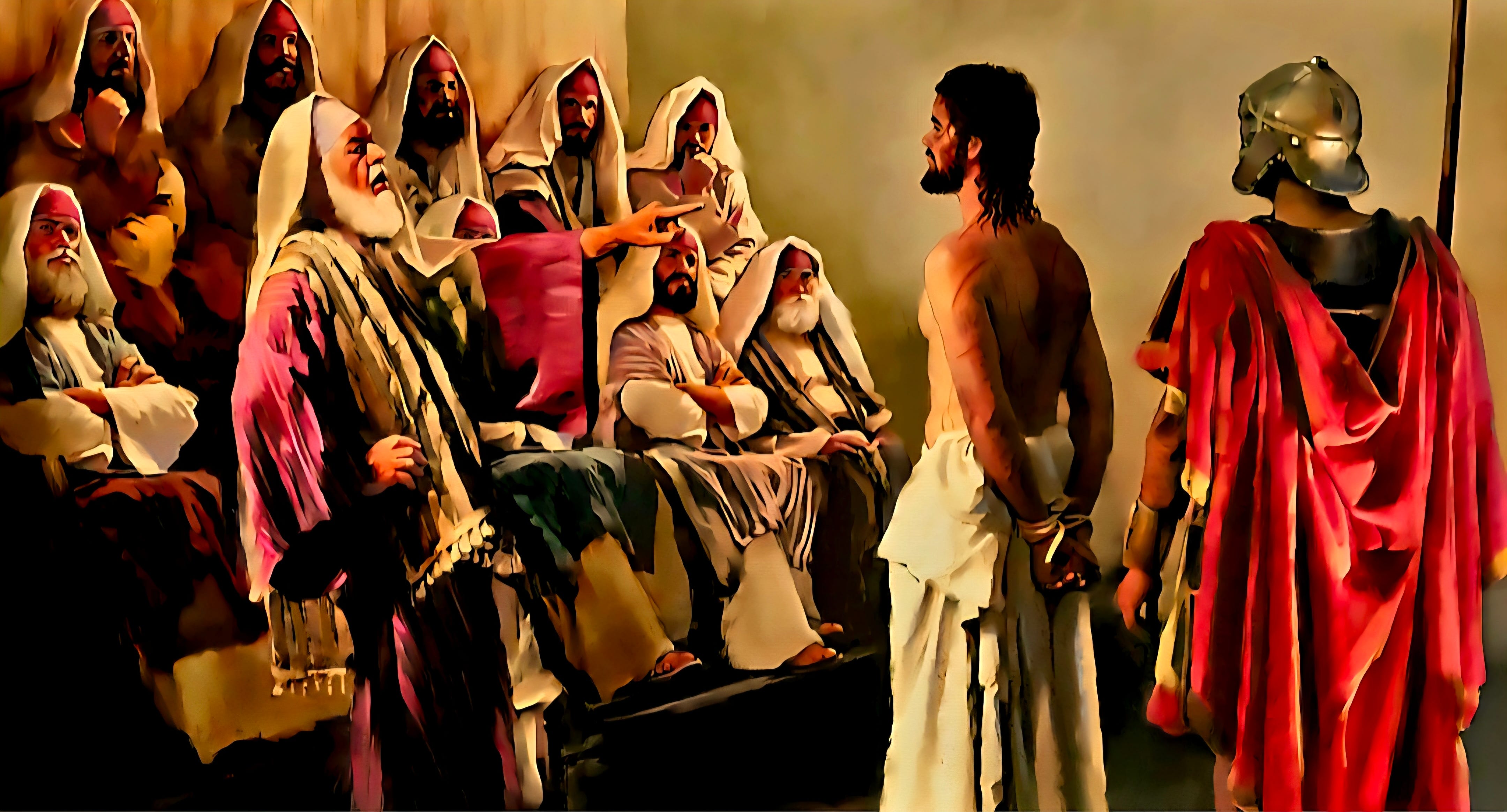
Did the nation of Israel, on the whole, reject Jesus, and how should this impact our view of Jewish people?
Yes, the nation of Israel did, by and large, reject the promised One. Though the Jewish origins and flavor of the faith are undeniable, it is also true that Jesus, the sole Savior of the world, was turned away by his own people. This is not a racist claim or an assertion that we should only relate to Jews, as commonly stated, as “Christ killers.” In other words, a person’s mistakes or flaws can be asserted without turning our relationship with that person into a one dimensional obsession with one feature of his or her beliefs. We can recognize as an historical reality with obvious ongoing evidence that most Jewish people do not accept the New Testament version of Jesus, but this disagreement—real and significant as it is—does not make Christians racists. It is no more “hateful” for believers in Jesus to point out that Jewish people generally reject the Savior than it would be “hateful” for Jewish people to hold that Christians, on a common Jewish interpretation, are idolaters (i.e., worshippers of a false God, according to them). The central issue is truth. Which viewpoint is correct?
It is not in any way inappropriate to point out what most Jews themselves assert, that they dismissed Jesus of Nazareth (the One, Christians affirm, as the Messiah) and mostly continue to do so to this day. Christians do, after all, following the words of their Jewish Lord, assert that Jesus is “the way, and the truth, and the life” and that “no one comes to the father except through [Him]” (John 14;6).
Christians can and should love others, including Jews, but this love must never be reduced to a sentiment that diminishes the good news we claim to believe. We love others, including Jews, but we also hope and pray for their reconciliation to God through his unique Son, Jesus.

How should we approach Nick Fuentes types?
There is a sense in which it is easy and proper to criticize those who behave like Fuentes sometimes does. If he truly admires Hitler and Stalin, we obviously oppose such views. If he is actually a white supremacist, this is a faulty and awful perspective. Still, Fuentes is a human being, a divine image bearer, and we can—without comprising our integrity or the truths of Scritpure—appeal to him, seeking to provide a measure of perspective on his sometimes extreme views. Tucker’s interview looked this way to me. Tucker found areas of agreement (perhaps similar to what Paul did when in Athens in Acts 17), sympathized where he could, and then seemingly sought to lead Nick like a big brother might. Though some might object to Tucker’s approach, it is definitely going too far to pretend that Tucker’s interview is Nazi-like. And it is certainly extreme to simply attack a supposed friend by joining together to go after him using the most divisive language.
Fuentes has said things that are objectionable. To whatever extent it is reasonable, such offenses should be countered. One wonders, though, if the same people who rightly denounce hatred and want to defend to the death what might be termed an ultra-Israeli view, are as opposed to publicly denouncing, say, homosexuality or the reality that most Jews are liberal and most reject Jesus. Furthermore, one’s objection to a person’s beliefs shouldn’t automatically exclude that person from conversation and the possibility of leading that individual in a better direction. Is this not the essence of evangelistic influence? Did not Jesus himself interact with Judas? Wasn’t it an enemy of Jesus, Saul of Tarsus, who was led to the Savior? God will judge us by our faithfulness and our fruit, not our willingness to take pot shots at others in some effort to signal virtue to other virtue signalers.
Can we unite around biblical values without succumbing to either naivety or arrogant virtue signaling and the checking of boxes?
Yes, I think it is possible, though challenging, for us to unite around common American and biblical values. Some have viewed this entire debate as a kind of psyop, a distraction of sorts to keep us from other meaningful America First tasks. In one sense, this is true, for there is always the temptation (feeding into human pride) to separate from others in order to “feel good” about ourselves, thus distracting us from other missions. In another sense, though, it is about time for conservatives and Christians to tackle this controversial subject. My hope, though, in seeking understanding around this subject, is that we neither cancel one another unnecessarily nor fail to address these matters with humble biblical and patriotic vigor. To this end, I offer some basic suggestions.

A WAY FORWARD
RESPECT ISRAEL. To respect Israel is to acknowledge its rich history, particularly as it relates to biblical events and the future. If the belief in Jesus as Lord has its origins, humanly speaking, in the descendents of Abraham, it will always be important to recognize God’s hands in the life of the Jewish people. This does not give Israel a free pass, of course, nor eliminate the reality of deep differences between Jews and Gentiles. It does, however, admit that the salvation Christians enjoy stems from God’s gracious intervention in the lives of Abraham, Isaac, and Jacob.

CRITIQUE ISRAEL. As for the current discussion, it is perfectly sensible, indeed required, that we evaluate any and all people who potentially affect us and our country. Even if you accept that God has a future plan for the Jews, even a land-oriented plan, this does not negate your duty to see everything through the lens of a Christian worldview. It has been pointed out by many, including strong voices on the Right, that the Nation of Israel has often engaged (as nations, including the US, tend to do) in certain questionable practices. Whether these claims are true, exaggerated, or completely fabricated, it still holds in principle that no group or individual can or should escape the scrutiny of discerning individuals. From a political standpoint, there are no exemptions, particularly when you claim to be advocates for America First.
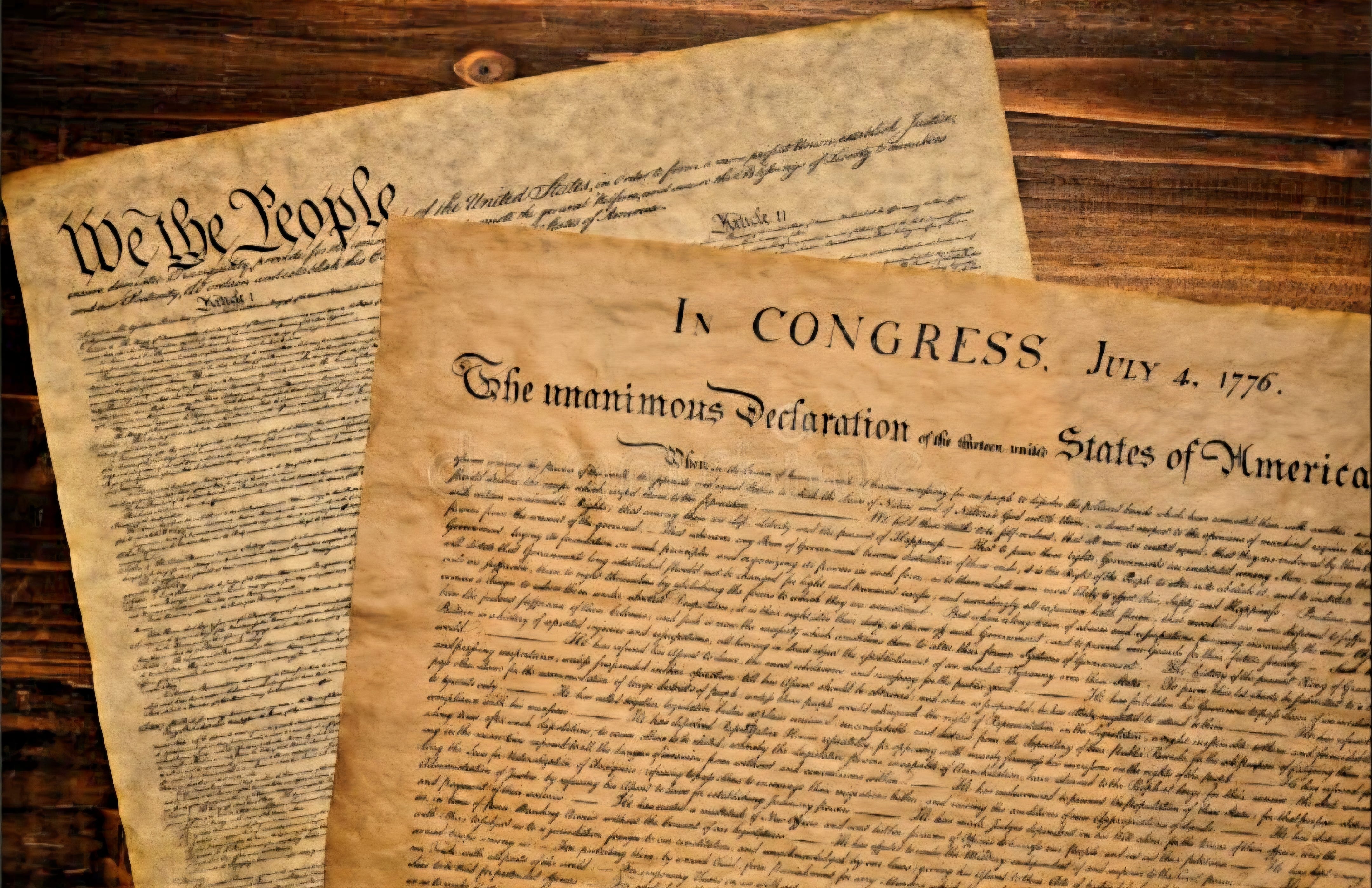
UNITE AROUND OUR FOUNDING DOCUMENTS AND PRINCIPLES. There is little doubt that the Declaration of Independence, Constitution, and Bill of Rights represent a unique paradigm for the life of a country. Though there are parallels elsewhere, and even inspiration from previous efforts to create organizational principles for an entire people, there is something unique about our American way of doing government. We are a country, at least in theory, whose authority is derived from “We the people.” The United States of America traces its founding not to human contrivances but to the Creator. Our rights are sacrosanct, even sacred. If these things are true, our way ahead as a people is to prioritize the United States over the viewpoints of others. This does not entail isolationism, a complete distancing from other nations, but it does mean that if we are going to address the Israeli question, or that of any other country (friend, foe, and everything in between), it will be by returning to the wisdom of our forefathers. As George Washington stated in his farewell address: “It is our true policy to steer clear of permanent alliance with any portion of the foreign world.”
Though you could argue that this admonition was due to the fact that our country was very young at that point, a mere couple of decades removed from our founding. Still, the basic instruction is immensely relevant given the massive entanglements and compromises we’ve experienced over the years. Indeed, one is reminded of an even older piece of wisdom: “No one can serve two masters” (Matthew 6:24).

DEVELOP AND EMPHASIZE A BIBLICAL WORLDVIEW. As stated above, our founders were quick to place the rights of citizens within a broadly religious or sacred context. During the timeframe in which our country came into existence, the original colonies already had state constitutions that reflected their interests, and every one of them asserts a Christian worldview. Building on this foundation, the references in our American founding are not to some nebulous deity but unquestionably to the God of the Old and New Testaments. Though the founders didn’t intend for any particular Church to run the government or be involved directly in governmental affairs or to debate and implement narrow ecclesiastical doctrine (e.g., mode of baptism, church membership), there was a presupposed worldview (inherited from previous religious backgrounds) that provided the air within which the burgeoning country breathed and took flight.
As but one illustration of this generally biblical worldview, there was (and is) a responsibility that citizens have to conduct their lives with integrity and with the goal of unity. Vigorous debate and even strong disagreements were permitted, but the goal—whether eventually realized or not—was the hope of unity. Apropos are Jesus’ words in Matthew 18:15-17.
15 “If another believer sins against you, go privately and point out the offense. If the other person listens and confesses it, you have won that person back. 16 But if you are unsuccessful, take one or two others with you and go back again, so that everything you say may be confirmed by two or three witnesses. 17 If the person still refuses to listen, take your case to the church. Then if he or she won’t accept the church’s decision, treat that person as a pagan or a corrupt tax collector.
Here, Jesus says that if you have something against your brother, your duty is to go to him, seeking to clarify and possibly heal an offense or rift. If this doesn’t work, you take other likeminded individuals with you in an effort to remedy error. Only then, if everything else has failed, do you “go public” with an announcement that so-and-so has violated whatever the value might be. While the passage is intended for believers within a church context, the idea surely extends to all human relationships. If you have a problem with someone, you don’t advertise it on the evening news or online; rather, you go to the person with whom you have a dispute.
This means that if Cruz, Levin, Shapiro, and others have an issue with Tucker, they should call, text, or meet with him to make things right (or at least attempt to do so). Rather than public denunciation, there has been a concerted effort to classify Tucker as some sort of heretic.
To be fair, Tucker has engaged in questionable behavior at times, and he too should tone down some of the rhetoric. At times, for instance, Tucker makes parenthetical statements that are both unnecessary and mean-spirited; this type of language creates unneeded division and, just as relevant, models for others an overly antagonistic spirit. “Do all that you can to live in peace with one another” (Romans 12:18).
Though at this point, as an outsider, I side mostly with Tucker—pushing for free speech, interaction with those with whom we disagree, and a willingness to tackle tough subjects like Israeli influence in our country—most of those involved should be willing to uncompromisingly combine the elements of truth and peace. A relentless pursuit of truth without an effort to lead others to that truth yields pride, chaos, and division. A sincere but emasculated desire for unity (at all costs) will create infidelity to the things that matter most.
Paul writes much about these matters in his letter to the Ephesians. In Chapter six, for example, he highlights the need for truth (via apostles, prophets, evangelists, pastors, and teachers—6:11-12), so there clearly is a truth to be identified and believed. At the same time, the intent in this and other passages is for unity around the truth (“unity in our faith and knowledge of God’s Son,” v.13).
For those who support Israel in an almost unqualified manner and for those who are skeptical of Israel’s motives and of the undue influence on many of our leaders, there is a need to recapture the balance required of those who claim faith in the God of the Bible. For Ben Shapiro, Ted Cruz, and Mark Levin, and for Tucker Carlson, Candace Owens, and even Nick Fuentes—the charge is clear: “speak the truth in love” (Ephesians 6:15).