
THE PHARISEE FACTOR
the allure and dangers of being “right”


A perusal of the Christian Gospels reveals that among the chief opposition of their central character, Jesus of Nazareth, is a group known as the Pharisees.
The language used in Jesus’ battles with the Pharisees is among the most direct, harsh, and condemnatory in all of the New Testament. He accuses these religious leaders of being unable to identify the clear signs of the times (Matthew 16:1-4), reprimands them for their lack of understanding of God’s purposes (Matthew 19:3-9), rebukes their legalistic religion (Mark 7:18-21) and, among other things, decries their devious motives (Matthew 22:15-22; John 8:3-11). At the core, were the issues of hypocrisy (Mark 12:38-40), the tendency to give far too much weight to non-binding tradition (which became a portal through which they interpreted and then approached God), and their resulting hardened hearts (Mark 8:14-21. John 9:39-41).
Hypocrisy, of course, is advocating for something that finds no demonstration in one’s life. You might “talk a big game,” but your life tells a different story. At some level, we are all hypocrites, though we are obviously urged to reject such phoniness.
As for tradition, it can be a good thing, and in some places the term is used as a practical synonym for divine revelation, but when man-made ideas, even the most well-intended of them, are given undue authority, truth tends to be compromised and the true message is distorted (see Mark 7:5ff). The result is a hardened heart and moral-spiritual blindness.
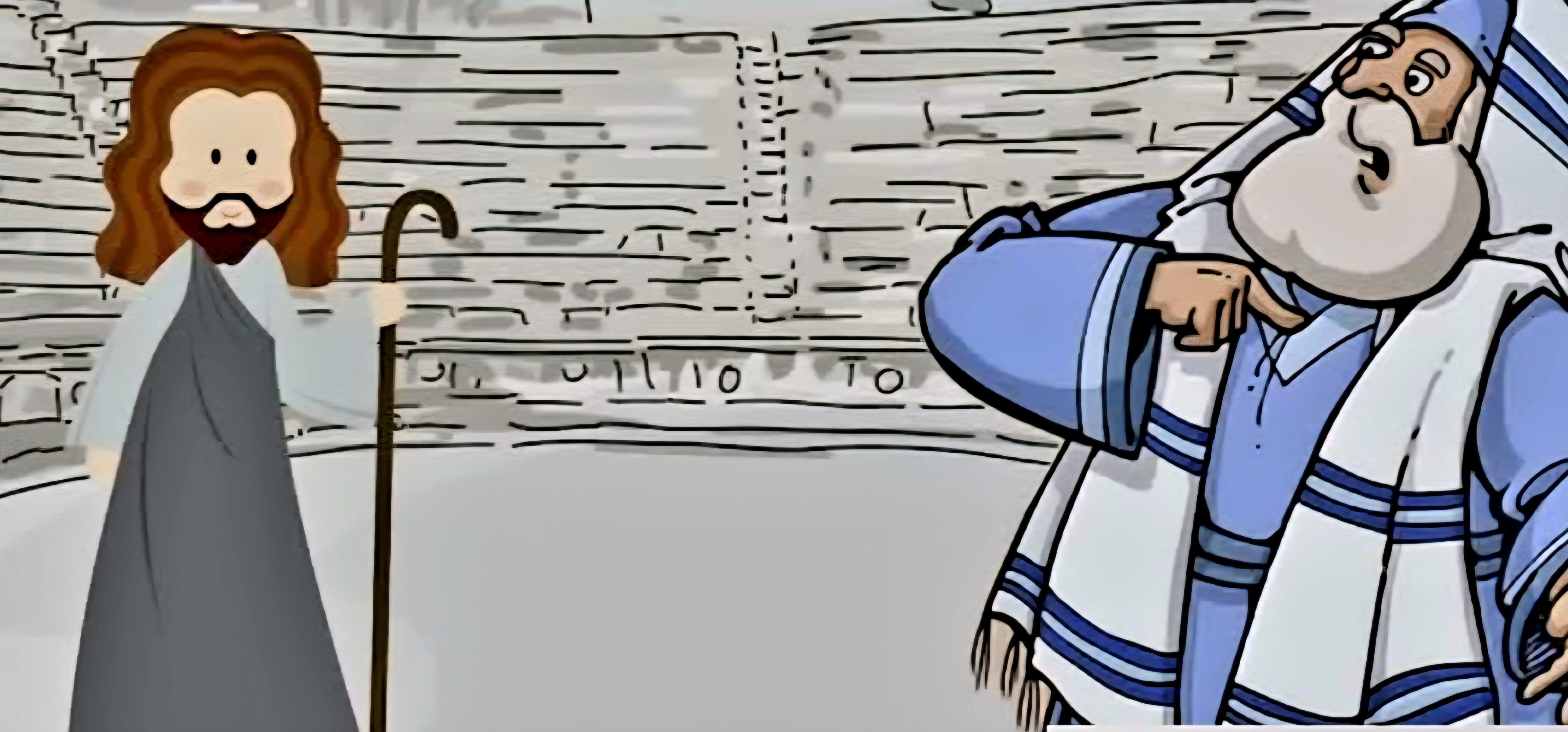
What is particularly striking about the Pharisees, though, is that they were considered the defenders of truth, the exemplars of what it meant to please God. They believed in much of what we call the Old Testament, basically accepting the canon that existed at that time. As a result, they promoted the true God (as opposed to idols) and were seen as the custodians and role models of everything holy. In some ways—generally, though not completely—they were the evangelicals and conservatives of the day. Yet, Jesus reserves his sharpest judgments for these very people! How can that be, and what does it mean for us today?
The issue of course is the aforementioned hypocrisy and the tendency to confuse our own views with the words of almighty God. Somewhere along the way, the Pharisees reversed truth and tradition, the unchanging disclosures of the Creator with the uncertain opinions of human beings. While originally engaged in legitimate efforts to know and proclaim the divine message, hubris became the driving influence.
Lots could be said about the Pharisees and what they teach us, but let’s take a look at a handful of basic lessons.
OBSERVATIONS
IT IS RIGHT TO PURSUE THE TRUTH.
The fact that Jesus attacks the Pharisees does not mean that the pursuit and defense of truth is unwarranted. Far from it! Indeed, Jesus says as much when he declares “The teachers of religious law and the Pharisees are the official interpreters of the law of Moses. So practice and obey whatever they tell you, but don’t follow their example” (Matthew 23:2-3). We are to “follow the pattern of sound words” (2 Timothy 1:13),“handle the word of truth” (2 Timothy 2:15), and “contend for the faith” (Jude 1:3). Truth must be pursued, even if the process is intimidating.
TRUTH IS PROPOSITIONAL BUT ALSO PERSONAL (JOHN 14:6).
This does not mean that propositional truth is optional or that some sort of mystical experience is to replace revealed truth. It does men, though, that the intention of truth is to point us to the One who is the truth (John 14:6). We must guard against “always learning and never able to come to a knowledge of the truth” (2 Timothy 3:7). A quick survey of Psalm 119 reveals this very thing, that disclosed truth intersects with and reveals God himself.
“I seek you with all my heart; do not let me stray from your commands” (v. 10).
“I have hidden your word in my heart that I might not sin against you” (v. 11).
“Praise be to you, Lord; teach me your decrees” (v. 12).
It is a pattern found throughout Scripture and particularly here in this Psalm. God is made known through Scripture, and God enables us to understand and apply Scripture.
There is an old saying that goes, “The Spirit of God rides most triumphantly in his own chariot.” The chariot here is the objective truth of his written revelation, but it is God who “rides” in that chariot. The truth of God and the God of truth are intertwined in the Bible and ought always mesh together in our hearts and lives.
TRUTH IS DANGEROUS.
When you know the truth (or believe you do), you are susceptible to temptations that don’t exist among the unconcerned. You must know what’s right, but knowing it makes it possible to ignore or violate it. The more you know—and you must know—the more likely you are to violate what you know, becoming a hypocrite.
The answer is not to fret or run and hide, but to recall the lesson above, that we require not only the proper use of our faculties but the ongoing intervention of God. “If any of you lacks wisdom, run for the hills?” NO! “If any of you lacks wisdom, remain ignorant?” NO! “If any of you lacks wisdom, ask God, who gives generously to all without finding fault, and it will be given to you” (James 1:5). Truth is dangerous, but the good Lord will see us through.
WHEN WE GIVE TOO MUCH WEIGHT TO CERTAIN COMPETING IDEAS, WE RUN THE RISK OF DILUTING OR VIOLATING WHAT MATTERS MOST.
The Pharisees pushed their oral traditions, and this eventually clouded their thinking to such an extent that they compromised the truth. We too can fall into this trap, allowing philosophical or political ideals (whether good or bad) to lead us astray.
POLITICS
My contention with politics has always been to engage. Men and women are put on this planet to live out the truth in every realm, including government and politics. In the process, we evaluate candidates, ideas, policies, and other matters, often with the realistic recognition that none of these is perfect, at least not in this world.
What do you do when a candidate displays good sense in one area but behaves foolishly in another? While it is important to display a measure of kindness, giving the benefit of the doubt to those with a proven record, the driving force in our evaluations must remain what God has definitively said. This does not resolve all of our issues, of course, but it is important to maintain our moral and spiritual bearings if we are to have any sense of direction. I am a conservative, and I believe I can defend conservative thought because it reflects in some broad way a biblical worldview. That said, my ultimate commitment must be biblical and theological, for only then is it a sure guide. To get this backwards is to open ourselves up to unwarranted compromise. One of these, in my view, has been on display among those on the political right.

THE DANGER OF BEING “RIGHT”
Many Christians have been supporters and defenders of the current president, and with good warrant. Not only was Donald Trump a better candidate than Hillary Clinton, Joe Biden, and Kamala Harris, but he had a very sound record of achieving many of the things he promised. What’s more, he has provided a message that runs contrary to status quo Washington, one that many America First patriots have been promoting for many years. While Trump made mistakes along the way—sometimes significant, most of the time trivial—his overall direction was positive. This is the reason he won the popular vote and garnered votes from those typically unconcerned about political matters. He was an outsider with a history of accomplishing some rather impressive things. This is why we were patient with his verbal blunders and some of his unwise choices; on the whole, he seemed to follow an America First agenda.
A few months into his second term, however, certain tendencies began to emerge, characteristics that made us feel initially uncomfortable, later nervous, and eventually, at some level, betrayed by the sudden shift in decision making.
Personally, I am hoping and praying that the president returns to his previous mentality and to the promises he made over and over again. Many long for the old Donald Trump to return. Though it tends to be more complicated than can be summarized in a few sentences, the 180 degree turn of the president (in some, not all areas) is disconcerting for millions of Americans, especially among younger supporters.

One of the more profound developments, though, is the seeming blindness displayed by some on the right, a willingness to defend the president no matter what he says or does. We already know that the left will criticize Trump for nonexistent crimes, that radicals will make up charges in order to destroy him. The unsettling feature of today’s political environment, however, is the attachment not to the truth as (hopefully) promoted by the president but to the man himself, even when he violates the truth. As already mentioned, it is not right to be hypercritical of everything a man does; we are sinners, after all, in need of patience and prayer. But what do you do when the person who has largely done what’s right appears to have “gone off the rails,” as it were? The left will continue to attack (unless there is some personal advantage that causes them to refrain), hating Trump not only for make-believe crimes but also, and especially, for actual blunders. In other words, those who hate the president enough to lie about him will surely assault him if he is actually guilty of missteps. But a good portion of those on the right, particularly among baby boomers, are so blinded in their allegiance to a (once properly performing) man that they are willing to downplay or even defend him when he goes awry.
FoxNews and Newsmax seem like propaganda machines for the president at this point, regularly praising him for questionable maneuvers and either overlooking or explaining away anything that might appear inconsistent with his own agenda. The language and explanations have been sloppy at best, and those who raise legitimate questions are quickly dismissed, sometimes with an added epithet intended to delegitimize any pushback against the current administration’s actions.
The statement that “Israel has too much influence” is often interpreted as “you’re an anti-semite.”
The assertion that “Iran was not an immediate threat to the US” is met with “they’ve been chanting death to America for 47 years.” — as if words warrant a military invasion.
The claim that the president has done a 180 on a number of issues is countered with “Are you taking the liberal’s side now?”
On and on it goes, harsh criticisms, inaccurate assumptions, and regular deflections. As for Iran, Trump recently attempted to minimize the damage by comparing it to WW I, WW II, and other conflicts, seeking to reduce the obvious disapproval by saying “We’ve only been here for (at that point) 31 days.” But this misses the point on a number of fronts. The Pearl Harbor attack and Nazi Germany atrocities have no modern equivalent. That something is awful does not automatically dictate the exact response to that awful something. Besides, and this is central, Donald Trump did not say merely that he was going to avoid “forever wars” (though he did say this on a number of occasions) but that there would be “no new wars,” including “no war with Iran.” For millions, a one day war is a violation of this promise, let alone a month-long war or more. We have lost at least thirteen people, plus hundreds of injuries, well over one hundred school children in Iran were killed, and who knows the toll among Iranian civilians—the same civilians who supposedly welcome our intervention in their country. On top of these things, the economic burden is currently awful, the midterms are at least in great jeopardy (which means a possible short circuiting of the original Trump agenda), the impact on the world economy (which intersects with our own) is immense, the possibility of terrorist attacks remain, and the nagging suspicion among youth especially that some of this might be driven by the contents of the Epstein files. Even if Trump gets out of the war today, he might have already sealed his own fate and induced a disappointment and cynicism among the electorate that could drive us in a really bad direction. It is not the fault of faithful constituents for pointing out the inconsistencies of this administration; it is the inconsistencies of Trump and his advisors that create this environment.+
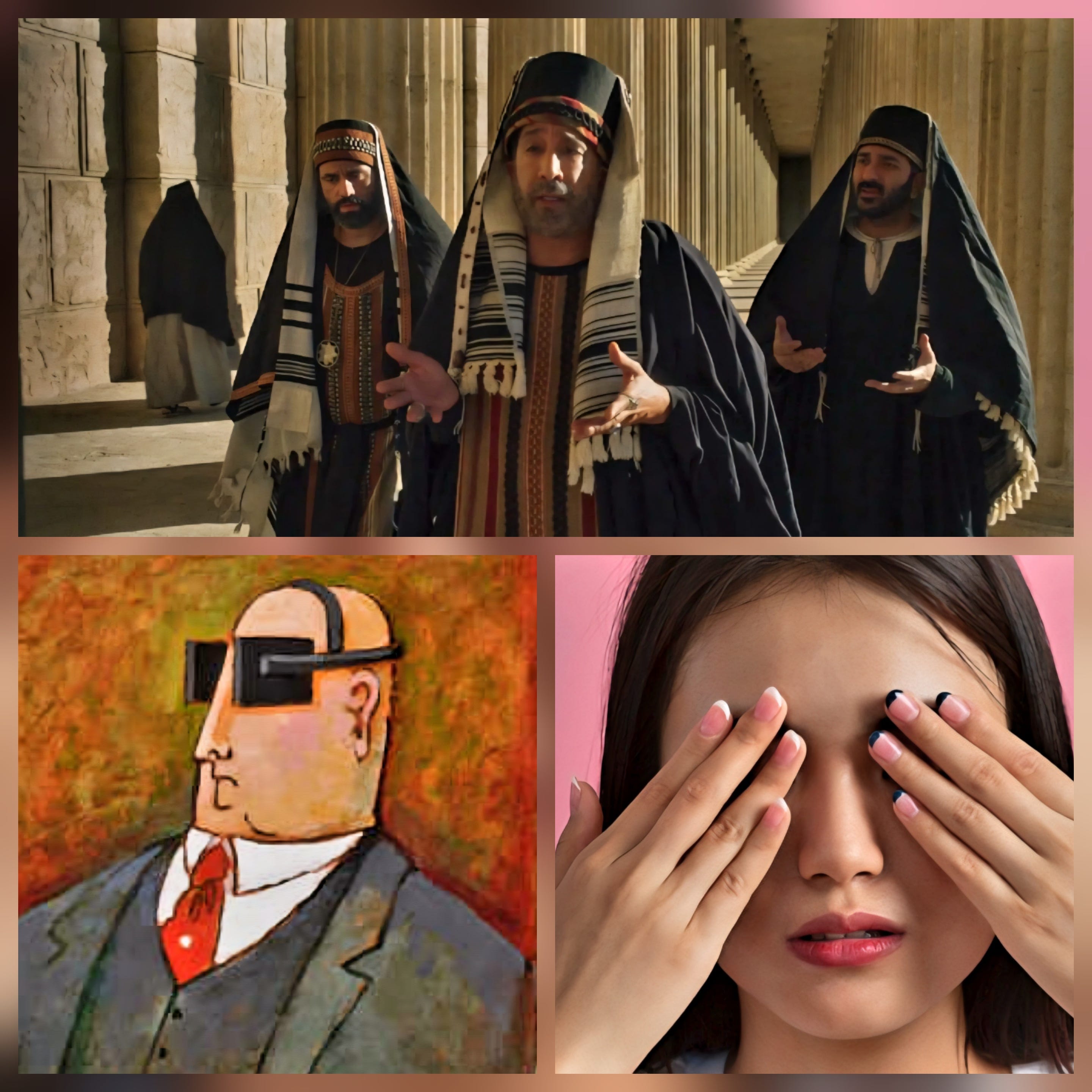
SELF-INDUCED BLINDNESS VIA THE PHARISEE FACTOR
On top of everything else, an overly zealous Zionism has gripped many Christians. Whatever your eschatological views (including the belief in a future for national Israel, etc.), the current behavior of Israel cannot be treated as a nonstarter or as an almost heretical assertion, and the demand that believers embrace everything related to Israel with naive enthusiasm is not biblical.
The truth is that Prime Minister Netanyahu has engaged in very questionable activities Indeed, a number of high ranking Israeli officials have criticized the Prime Minister, accusing him of a number of crimes. (For a nominal fee, see The Bibi Files to get a little more perspective.)
The truth is that Gaza, whatever good might come out of it, has been a place of untold horror for innocents. Charlie Kirk labeled it an ethnic cleaning.
The truth is that there are many cases (spanning decades) of Israeli bullying and overly aggressive behavior—American officials declaring an almost dogmatic privilege assumed by certain representatives, the detection of spying devices left behind by Israeli visitors, an obvious pushiness regarding not only Gaza but now Iran.
The truth is that many a biblically minded believer holds “end times” views that are at odds with the current Zionist perspective. Whether right or wrong, their voices must be respected.
The truth is that a Christian worldview does not encourage Christians to dismiss what they see with their own eyes. We are not given a “free pass” to legitimize improper behavior simply because the ones performing it happen to be our favorites. Christians make mistakes, of course, but the effort by the administration and its water carriers (in media and via para-government individuals and groups) to mock or erase dissenting Christian (and/or conservative) voices is all too obvious.
The truth is that the Epstein situation is a horrific one that simply must be adequately addressed, and the administration, including Trump on a number of occasions, has failed miserably here, refusing to confront an incredible evil that continues to plague our society. What we have observed is not transparency of any kind. Indeed, even if the files cannot be trusted, even if they contain “fake news” intended to cripple the president, none of this can be used to dismiss the notion of bribery (through a pedophile ring, etc.) that has been demonstrated to be a real driving influence in the way government and others in power work. This is deep-state to the core.

Then, you have the personalties—BenShapiro, Mark Levin, Dan Bongino, Ted Cruz, Mike Huckabee—and their over-the-top vehemence against anything that threatens this administration. What they miss is that the actual behavior of the administration is what threatens it and us. When Bongino rants like a lunatic, Levin wants blood, Cruz brags about Israeli motives, Shapiro shows his Israel-first colors, and Huckabee attacks honest brokers who point out obvious deficiencies in the president’s plan—something has gotten out of control.
There are people who oppose Trump for foolish reasons, of course, but there are dozens of notable figures who were (or are) Trump supporters, those not at all guided by irrational liberal talking points but by experience and objectivity. And this is perhaps most telling—that the best critics of the recent decisions by Trump, those who have been and are America First, are ignored by what some have now termed a MAGA cult.@; instead of discussing opposing views, there is an effort to label any disagreement as compromise and political heresy. Quite the contrary, I have found that many of these commentators are driven by Christian values that are dismissed by the White-Pilled Right, i.e., those who cannot bring themselves to imagine that Trump might have gone astray.#
The point of all of this is that is is quite easy to become like the Pharisees—so used to being on the right side and defending the truth that other matters get in the way of the truth, other agendas interfering with our moral compass . . . or at the least pursuit of what seems to be true through a Christian lens.

The Pharisee factor is one in which past success interferes with current discernment. It can involve reasonable political goals that are placed ahead of obvious spiritual ones. It sometimes involves a passionate determination to achieve what is perceived as good but is actually a mindset that hinders wisdom.
If you are a conservative, you are accustomed to being on the right side of things. This is particularly true if you are a Christian, seeking to apply a biblical worldview, hoping to derive your conservatism from Scripture. When you are correct about life (against abortion as a form of birth control), the border, the idea of economic fairness (laborers worthy of wages), traditional values, and the errors associated with gender ideology and other radical matters, you are susceptible to manipulation (by those who know what gets your attention), self-deception (the notion that you are correct simply by being on the right political team), and pride. That doesn’t mean you should relent from supporting the truth wherever and whenever you can but only that being in such a position—absolutely essential as it is—puts you in a place where you can become a Pharisee. Make no mistake about it. We are seeing it nearly every day. There is danger in being right . . . there is danger in being on the right. This is why it will always be important to wrestle with our own hearts and lives as we deal with the Pharisee factor.
______________